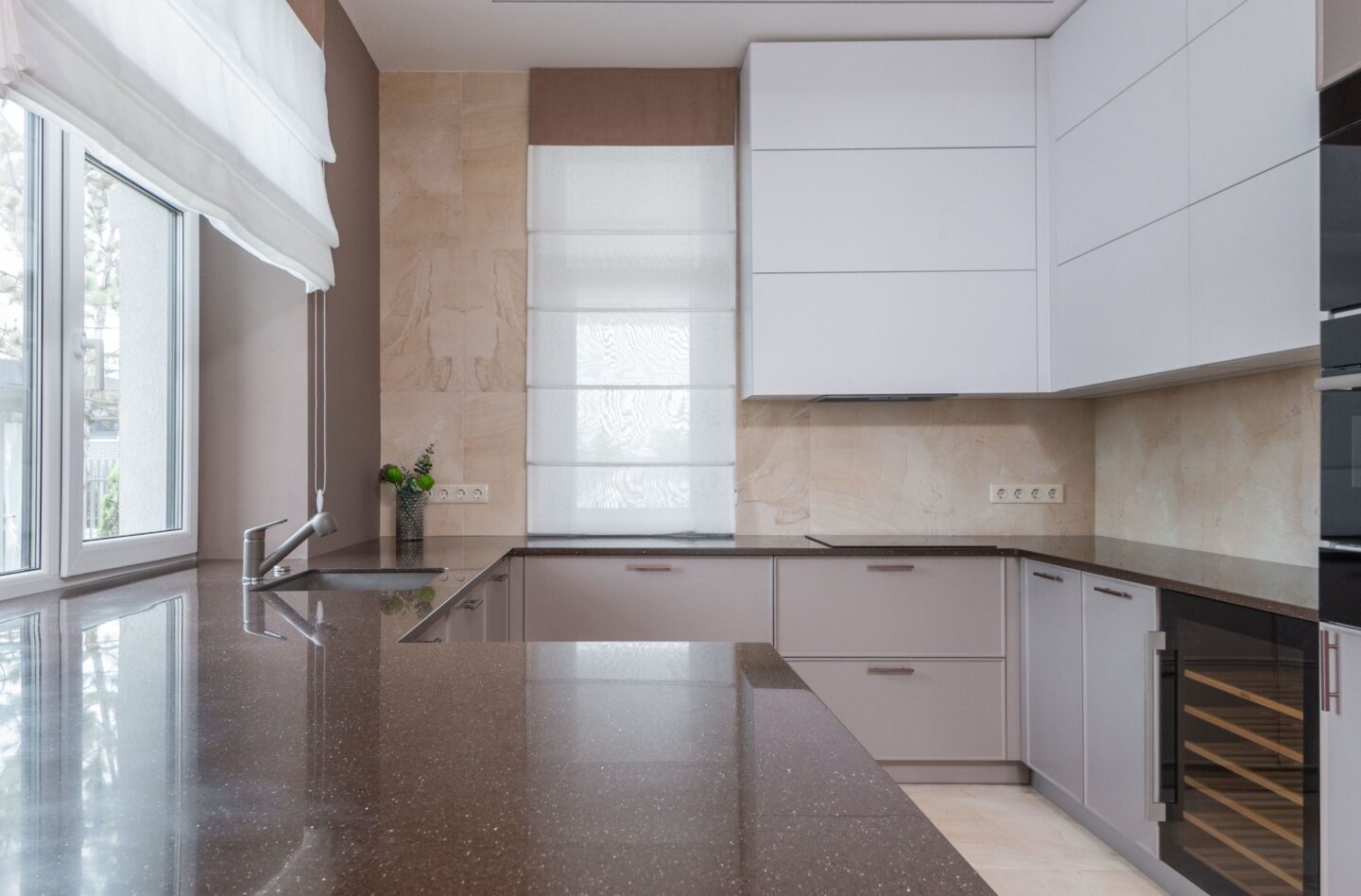
Quartz and granite are two of the most popular choices for kitchen countertops, and it is easy to see why. They’re both durable, look high-end, and are widely preferred by homeowners. However, when it comes to picking between the two materials, homeowners often find themselves struggling to decide which one is the better fit for their kitchen.
In this blog, we’ll provide a practical guide on how quartz and granite countertops differ, where each material performs best, and how to choose kitchen countertops that suit your remodel.
What is the Difference Between Quartz & Granite Countertops?
Quartz and granite may look similar once installed, but they behave differently because they are built differently. Granite comes from a natural slab, so its color, pores, mineral structure, and movement vary from one piece to the next. Quartz kitchen countertops are made by combining crushed quartz with resin and pigments, which creates a more consistent surface from slab to slab. For homeowners, many quartz countertop benefits come down to that consistency, along with easier cleaning and less reliance on sealing.
Here’s a helpful table summarizes the main key differences between quartz and granite countertops.
| Feature | Quartz Countertops | Granite Countertops |
| Material type | Engineered stone made with quartz minerals and resin | Natural stone cut directly from slabs |
| Appearance | More consistent colors and patterns | Unique veining, speckling, and natural movement |
| Maintenance | Does not need sealing | May need sealing depending on the slab |
| Stain resistance | Strong because the surface is non-porous | Good when sealed properly, but varies by stone |
| Heat resistance | Heat resistant, but high heat can damage resin | Generally more heat tolerant |
| Best for | Homeowners who want low maintenance and design consistency | Homeowners who want natural character and stone variation |
How to Choose the Right Kitchen Countertop Materials for Your Remodel
When you are planning a remodel, it is easy to get caught up in samples, colors, and inspiration photos. Those details matter, but they only show one part of the decision. With quartz and granite, the bigger question is how each surface will perform in a real kitchen.
Before deciding which countertop is right for your kitchen, especially if you are also thinking about kitchen planning on a budget, it helps to know how quartz and granite differ beyond appearance.
Decide How Much Maintenance You’ll Realistically Do
Kitchen countertop maintenance should not be treated as an afterthought because it affects how much you enjoy the countertop years after the remodel. Quartz is a strong option for low-maintenance kitchen countertops because its non-porous surface does not require sealing.
On the other hand, granite may need a little more attention over time, as some stones need sealing and are more sensitive to oils, acidic spills, and harsh cleaning products.
Compare Stain Resistance for Everyday Spills
Spills are part of any real kitchen, whether it is coffee in the morning, tomato sauce at dinner, or a little red wine that sits longer than planned. Quartz usually handles everyday messes like tea, coffee, oil, red wine, tomato sauce, and turmeric better because the surface does not absorb liquids easily.
Granite can still be a durable choice, but some slabs are more porous than others, which makes sealing an important part of its protection.
Consider Durability Beyond Scratches
When searching for durable kitchen countertops, it is easy to focus on scratches and forget the areas that take the most stress. Edges, corners, seams, sink cutouts, and cooktop openings are often where problems show first.
Quartz and granite are both strong materials, but a dropped pan or poorly planned seam can still leave a chip or crack. This is why the way the countertop is cut, supported, and finished plays a big role in how well it lasts.
Compare Engineered Consistency vs Natural Slab Movement
A small sample can be misleading, especially with natural stone. Quartz tends to give you a clearer idea of what the installed countertop will look like because its color and pattern are more controlled. That can make it easier to match with cabinets, flooring, tiles, and paint colors.
Granite is different because the design comes from the stone itself. One section may be calm and even, while another part of the same slab may have stronger movement or a change in color. That natural variation can give a kitchen depth and character, but it also makes full-slab viewing more important before you commit.
Factor In UV Exposure Near Windows or Garden Doors
Before choosing between quartz and granite, look at the parts of your kitchen that get the most direct sunlight. Quartz can be affected by long-term UV exposure because of the resin used to bind the surface. Granite is generally more suitable for sunny spots, but polished stone surfaces can still change slightly with repeated exposure to solar radiation. This matters most near skylights, wide windows, and doors that bring in strong afternoon light.
Compare Long-Term Design Ageing
One of the top kitchen renovation mistakes is failing to consider how a countertop will age visually over time. Some quartz patterns, especially bold marble-look veining, can feel very current now but less timeless later. Granite can have the same problem if the color is too busy or specific. If you want a calmer long-term look, choose a softer movement. If you want to make a statement, make sure you truly love it beyond the trend.
Final Takeaways
Choosing between quartz and granite is really about choosing what you want to live with every day. Quartz offers a more predictable surface that is easy to maintain and simple to design around. Granite offers natural depth, variation, and a sense of character that engineered surfaces cannot fully repeat.
Both can be excellent kitchen countertop materials when they are chosen for the right reasons. Look at the full slab, think about the light in your kitchen, be honest about maintenance, and consider how the surface will age with the rest of the room. A good countertop should not only look right on installation day. It should still feel right years later.

