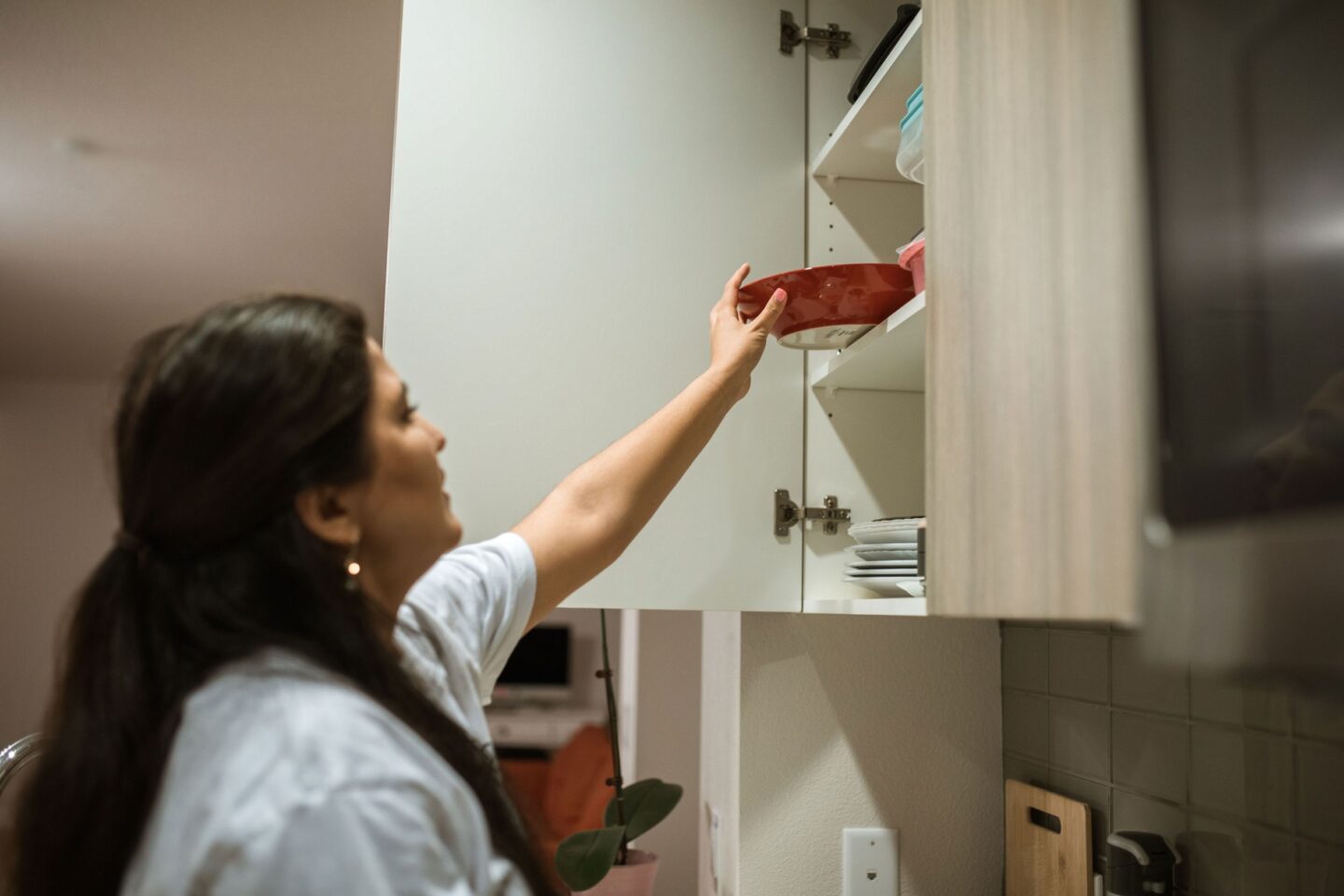
Managing a busy household can make kitchen organization feel more challenging. With groceries coming in, utensils being used, and everyone moving through the kitchen at different times of day, it is easy for even a tidy kitchen to feel messy by the end of the day.
If you’re struggling to find space for everyday items or constantly moving things out of the way, this article will help you spot the storage habits that are making your kitchen harder to use and explain how to maximize kitchen storage without adding more clutter.
Why Kitchen Storage Mistakes Can Make Everyday Routines Feel Harder
Keeping utensils in random spots and cramming too much into easy-to-reach drawers may seem like a harmless habit, but it can make everyday tasks feel more frustrating than they need to be.
You might think “I’ll fix it later,” or “at least everything is in a drawer,” but without knowing how to create storage that supports your daily routine, those small frustrations can quickly pile up. A cluttered drawer might only slow you down for a few seconds, but when it happens every time you cook, unload the dishwasher, or pack lunch, it starts to affect how the whole kitchen feels.
Good kitchen organization is not just about making everything fit. It is about making the kitchen easier to use. When you know which storage mistakes are making the room harder to manage, you can make smarter changes that lead to a more functional kitchen design.
1. Storing Items Where They Fit Instead of Where You Use Them
One of the most common kitchen storage mistakes homeowners make is putting items wherever there happens to be space. It may seem practical at first, but it often makes everyday routines harder. A better approach is to create small kitchen zones based on how you use the room.
For example:
- Keep chopping boards, knives, and mixing bowls near your prep area.
- Store pans, utensils, oils, and spices near the hob.
- Place mugs, tea, coffee, and teaspoons together.
- Keep plates, bowls, and cutlery near the dishwasher or serving area.
When everything has a logical home, kitchen organization becomes much easier to maintain.
2. Treating Cabinet Configuration as an Afterthought
Homeowners often think kitchen storage is mainly about having enough cupboards, but the way those cupboards are set up matters just as much. A kitchen can have plenty of storage and still feel awkward if everyday items are buried at the back of deep shelves or if the drawers you use most are too shallow for what you need.
A functional kitchen design should make frequently used items easy to access while minimizing clutter. According to the experts at Seattle Cabinets, thoughtful cabinet configurations can significantly improve storage capacity without overloading the room with unnecessary units.
A few cabinet choices can make a noticeable difference, such as:
- Deep drawers for pans and mixing bowls
- Pull-out shelves for pantry items
- Vertical dividers for trays and chopping boards
- Corner storage that does not waste hard-to-reach space
- A dedicated place for small appliances
The goal is not always to add more storage. Often, it is to make the storage you already have work harder.
3. Letting Worktops Become Catch-All Storage
One of the easiest ways for a kitchen to feel untidy is letting the worktop turn into a temporary storage spot. Appliances, paperwork, keys, mugs, snacks, and containers can pile up throughout the day until there is hardly any clear space left to cook.
This is especially frustrating in a small kitchen, where every bit of counter space matters. When the worktop is crowded, you have to clear space before you can cook, which adds another step to an already busy routine.
To reduce worktop clutter, try to:
- Keep out only the appliances you use daily
- Give post, keys, and small items a separate drop zone
- Store containers and mugs inside cupboards, not on the counter
- Clear one main prep area at the end of each day
4. Hiding Everyday Items in Deep, Hard-to-Reach Cupboards
Deep cupboards sound practical at first because they offer plenty of storage. The problem starts when everyday items get pushed to the back and forgotten. Food containers, baking trays, spices, small appliances, and pantry items can all disappear into these spaces, leaving you to rummage around whenever you need them.
Better access can make a big difference. Here are some smart kitchen storage options that can improve access for deep cupboards:
- Pull-out shelves
- Deep drawers
- Lazy Susans
- Vertical dividers
- Clear grouped bins
- Lid and tray organizers
5. Organizing Before You Declutter
It is tempting to buy kitchen organizers, drawer dividers, baskets, jars, and storage bins as soon as the kitchen starts to feel messy. They can be useful, but they will not solve the problem if you are simply organizing too much stuff.
Before adding more organizers, take a quick look at what can leave the kitchen. Start with:
- Expired spices and pantry items
- Food containers without matching lids
- Duplicate utensils and gadgets
- Mugs, plates, or bowls you never use
- Small appliances that rarely leave the cupboard
- Items that belong somewhere else in the home
Once you have cleared out what you no longer need, organizers can do their job properly. They should make useful items easier to find; not help you store clutter more neatly.
6. Forgetting About Bins, Recycling, and Cleaning Supplies
Kitchen storage is not only about where you keep food, pans, and utensils. It also needs to support the clean-up that happens after cooking. If bin bags are stored far from the bin, dishwasher tablets are in a random cupboard, or sprays and cloths are scattered around, resetting the kitchen takes longer than it should.
A few simple changes can make cleaning feel much easier:
- Keep bin bags close to the bin
- Store dishwasher tablets near the dishwasher
- Keep cloths, sponges, and sprays near the sink
- Give recycling and food waste a clear place to go
- Keep one area of the worktop easy to clear at the end of the day
Final Takeaways
The best kitchen storage is not always about having more space. It is about using the space you already have in a way that makes cooking, cleaning, and everyday routines feel easier.
The good news is that you do not need to change everything at once. Focus on the habits that create the most daily friction. Move frequently used items closer to where you need them, make clean-up supplies easier to access, and declutter before buying more organizers. A kitchen that works with your routine will always feel better than one that simply holds more stuff.

