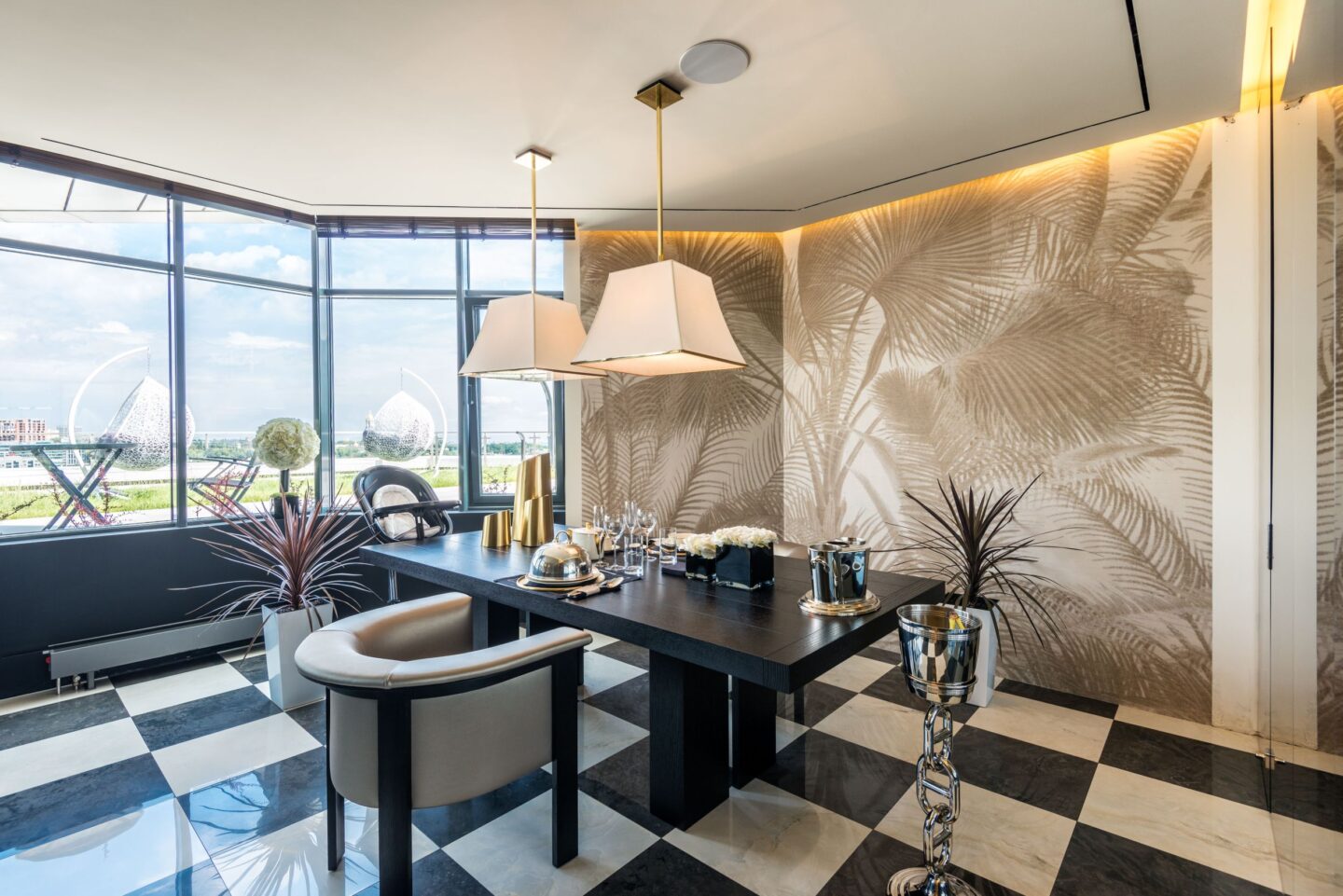
Dining room wallpaper is going to be seen in the morning when people have breakfast, as well as on evenings when the family has dinner together, and sometimes when the family hosts parties. When looking for dining room wallpaper, you first need to decide which furniture and other finishes are going to stay in the room. Then, look at the walls of the dining room from the doorway and also while sitting in one of the chairs around the table.
Decide how the room should feel
A softer contrast provides a peaceful background for everyday dining. However, a stronger pattern may provide a more dramatic atmosphere for social events. Both types of contrasts do not require any particular color scheme.
When you are selecting your Dining Room Wallpaper, think about how you will use the space with regards to the furniture in it. For example, if you want to create a sense of unity in the design of the dining area, then choosing wallpaper that has similar wood/upholstery colors as your furniture can help achieve this. However, if you would prefer to highlight either a table or sideboard, then a contrasting wallpaper can do so. In addition, when using patterned furniture in a dining area, it may be better to choose a more subtle/plain wallpaper.
When thinking about how the room will be used, consider all components that are part of that usage, such as chairs pulled from the tables, the setup on each table (place settings), and the various types of food service equipment being utilized. All of these elements will help create a general image of the space.
Plan artwork around the visible wall
A sideboard behind a table will provide an attractive setting for displaying items. A wall opposite the table will provide art for diners to view while they eat. Decide based upon which view is best, not what you usually do.
Measure the wall; use markings to indicate where each of the following will be located along the wall: windows, doors, chairs/backs of chairs, sideboards, panelling, mirrors, and pictures. Each marking should include the dimension and position of the object it represents. Evaluate the available space.
The mural should be balanced in relation to either the main area of the tables seating plan, or the largest continuous part of the wall. The central focus of the mural does not necessarily have to be centered on the entire wall.
A tall sideboard might cover up the flowers that are in front of the mural. Therefore, you should place your most critical details either above or next to the furniture. Additionally, when you order, you should ask for a sample showing how the image will look at the size you selected.
Fitted cupboards and radiators are known to break up scenes. Slopes will cut off motifs, and alcoves could look darker. When deciding how to place patterns, consider chimney breasts and the recessed areas surrounding them as separate parts of your design.
Choose scale without crowding the room
Consider both the proportion of the room and how much undisturbed wall there is. A large motif with a great deal of empty space around it would likely be successful in a smaller dining room because a large portion of the motif will still be seen. Smaller, denser patterns can make the room appear more active.
If you have a small dining room that does not receive much natural light, use softer contrast and use simpler materials on your walls. A pale colored wallpaper will never make up for lack of light.
Repeats on wall paper divide into areas where there are doors and/or cabinets. When choosing a wall mural for your dining room, you will need to find an open area of the wall that is suitable for the composition of the mural. When determining whether a mural is appropriate for your space, judge the motif size rather than relying on a thumbnail image.
The use of extra wall decor should be limited if there are many details in the pattern. A mirror or other types of picture frames will cover up your selected design.
Test colours during mealtimes
Compare colors to flooring, wood and other fixed finishes. The feel of a dark dining room wallpaper is determined by the amount of contrast, lighting, pattern, and size.
Normally used to view specimens in dark environments, pendants create uneven illumination while wall lights can bring out details of surface texture. Additionally, as you adjust the amount of light being emitted from a dimmer switch, you will alter the level of detail that is still apparent.
Screens give off light, whereas printed items reflect light. The way that a screen is set up and how its surface is finished will determine what color people see. When browse XWALLX wallpaper designs, take into account your current furniture and color scheme as well as the position of each design in relation to the intended wall space. Then test out sample pieces of wallpaper in an upright position on the wall spaces where they are going to be applied.
Check the daylight and dinner time light coming in from the door and table, including the areas that are darker than the others.
Connect textiles, paint and coverage
If you plan on keeping the patterned chairs/curtains, use a more subdued wallpaper that shares at least one color with them. You may find that if your patterns have different scale and/or contrast levels than your chairs/curtains, they will look fine together. Also, consider how the patterned tablecloths/placemats will affect the overall appearance of the room.
The simple style of the window treatment, the simple floor covering, or the simple furniture upholstery will enhance the detailed design of the wall paper. You should pick out the rest of the colors for the walls and trim based upon the colors in the background or the supporting colors. Test these colors against sample swatches.
One feature wall is best suited for dramatic images or very full furniture. All, or several, walls may have simple repeat patterns, or even a deliberate enveloping design.
Keep future changes flexible
When selecting wallpaper for your dining room, consider how well it will complement various types of linens and furniture. It is possible to use the same wallpaper in the adjacent kitchen or living area, or create a visual link between the two spaces using coordinating colors.
Prior to placing an order for the product, make sure to verify sample availability and whether or not the product has been cropped. Also, review all manufacturer documentation regarding how to clean, what types of materials were used in its production, what type of adhesive is required to install the product, if the surface you intend to apply it on will be suitable for the product, and how to properly install the product instead of assuming the quality of the product.

