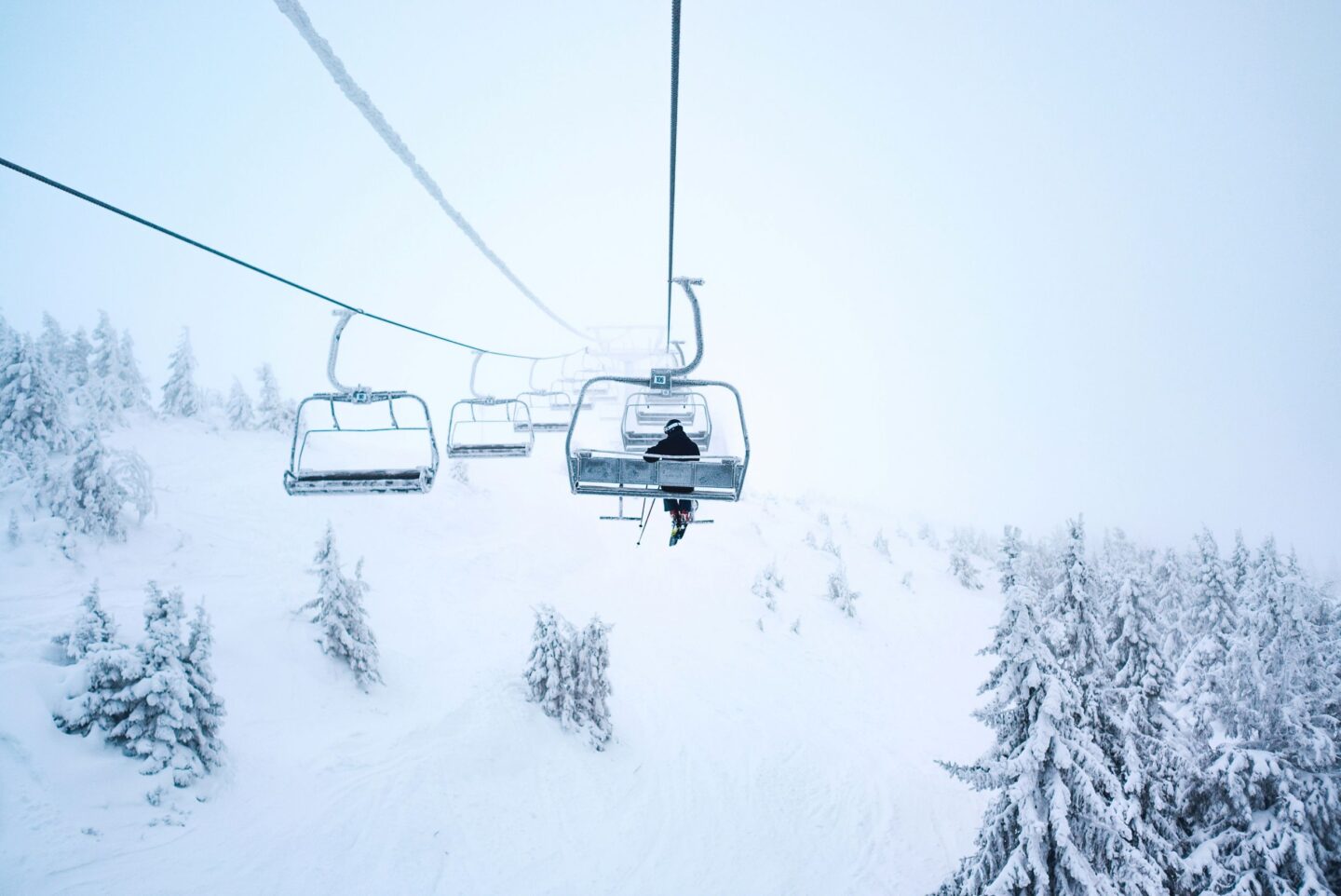
Don’t want to kill the planet and go skiing? Well, no problem! You still can do all this and even more, if you know where to look and what to do. Climate change is taking a toll on our favorite winter sport. Shorter seasons, shrinking natural snow, and a record-breaking 89% of ski resorts have to use artificial snowmaking to open. This doesn’t have to be the end of skiing as we know it though.
If you still want to take incredible ski trips but make smarter choices and take care of the mountains for future generations, then sustainable skiing is for you. It is a matter of simple choices and making a difference one person at a time. After all, skiing shouldn’t be about environmental destruction and ignorance, right?
In this article, you will find:
- Why sustainable skiing matters more than ever
- How to get there: The biggest impact you can make
- Choosing the most sustainable ski resorts
- Making eco-friendly gear and equipment choices
- Simple changes that make a real difference
Why sustainable skiing matters more than ever
Climate change and environmental impact aren’t skiing industry’s biggest concerns. Unfortunately, between 2000 and 2019 the industry lost $5 billion due to climate-related impacts. We are talking about shorter seasons, decreased snow quality, and ski areas closing forever.
The thing that makes skiing possible is vanishing. The average ski season in the US has already shortened by 5-7 days, but researchers warn it could double or triple by 2050.
If there is a silver lining in the whole climate change cloud, then here it is…
Over 60% of ski resorts have introduced eco-friendly initiatives. The number of sustainable ski areas is growing by 8% every year. These ski resorts are fighting back, and there is a lot you can do, too.
Getting there: The biggest impact you can make
Most skiers are not aware of this but transport makes up 50-75% of the total carbon footprint of their ski trips. Your flight to the mountains is doing more damage than anything else combined.
Take the train instead of flying. Taking the train instead of flying reduces your carbon footprint by more than 80%. Trains take you to most European ski resorts, like Zermatt, St. Anton, Davos with their own stations. Over the pond, the Amtrak Winter Park route takes you straight to the Colorado slopes.
Book direct flights if flying is not an option for you. Every takeoff and landing burns a lot of extra fuel, which means shorter routes mean lower emissions.
Before you go skiing, be sure that you have all of your equipment. Quality equipment from professional ski shop services in Tulsa or any other experienced local store will have you well-prepared for sustainable travel to the slopes. You will have well-fitted and well-maintained equipment, which will perform better, will last you longer and will reduce waste.
Use the resort shuttle or car-share options to get around when you get there.
Choosing the most sustainable ski resorts
Not all ski resorts are equal in the sustainability department. The most eco-friendly ones are doing amazing things:
They are using 100% renewable energy sources and carbon reduction programs. They run electric snow groomers, use geothermal heat, and filter water to drink.
Here are some of the most sustainable ski resorts to check out:
- Laax, Switzerland is fully powered by CO2-neutral energy sources. Charging stations for electric vehicles and bikes are available throughout the resort.
- Davos was the first ski resort in the world to receive “Energiestadt” (“Energy City”) certification back in 2001.
- Avoriaz, France is one of the few car-free ski resorts in the Alps. Wood-pellet boilers and dual-energy heating plants power the resort operations.
- Arapahoe Basin ski resort in Colorado just hit 100% renewable electricity and achieved carbon neutrality, and Vail Resorts are on a mission with their “Commitment to Zero” initiative to reach significant emissions reductions.
Research and find out what resorts you are planning on going to are doing to help the planet. Do they use renewable energy, provide public transportation, have green certifications and protect the local ecosystems?
Sustainable gear and equipment choices
You don’t need to buy new ski gear every season. Renting gear is one of the most sustainable and environmentally conscious choices that you can make.
Renting from resorts and local ski shops saves you money, reduces waste, and you don’t have to go through airport security carrying all of that bulky equipment.
However, if you are a regular skier and need your own gear, go for second-hand. Pre-loved skiing equipment works just as well as the new one but is way cheaper and keeps perfectly usable gear out of landfills.
Still, if you are set on buying new, look for sustainable brands and companies:
- Patagonia is made from recycled materials, and the brand offers free gear repair.
- Picture Organic Clothing is another brand that works with eco-friendly fabrics.
- Salomon introduced their new line of fully recyclable ski helmets.
Small gear choices can make a difference as well. Bamboo ski poles are stronger than aluminum and they come from one of the fastest-growing renewable resources in the world. Eco-friendly ski wax is made with plant-based ingredients instead of petroleum that takes 100,000 years to biodegrade.
Your ski clothes matter, too. Look for items made of organic cotton, recycled plastic bottles or reclaimed fishing nets.
Simple changes that make a real difference
Sustainable skiing does not have to be difficult. Small changes can have a massive impact if millions of skiers around the world start making them.
- Pack your own food and drinks in reusable containers instead of buying packaged items on the mountain. Single-use plastics are one of the most serious issues at ski resorts these days.
- Buy local and seasonal produce when you are in the resort. Support the mountain communities and reduce emissions from transportation by choosing regional products and food.
- Use reef-safe sunscreen without oxybenzone or octinoxate. These chemicals wash into mountain streams and damage the aquatic ecosystems.
- Stick to marked trails to preserve the fragile alpine ecosystems. Off-piste skiing in protected areas damages the vegetation that takes decades to recover.
- Try lower-impact activities such as cross-country skiing or snowshoeing. These don’t require energy-hungry ski lifts, after all.
- Stay longer rather than taking multiple short ski trips. A one-week ski vacation has a much smaller carbon footprint than three weekend getaways combined.
- Support organizations such as Protect Our Winters that advocate for climate policy, educate skiers on sustainability and help ski communities adapt.
The bottom line
Sustainable skiing is not about sacrifice, it is about protecting what we love.
The mountains are the most wonderful gifts that nature can give us. What we do in our lives, where we travel and how we get there is our responsibility to the next generations and the planet.
Every small conscious choice you make matters. Be it taking the train instead of flying. Choosing a resort powered by renewable energy and electric snow groomers. Renting the gear instead of buying new.
These are not huge life-altering changes, but when they are made by millions of skiers, the difference is monumental.
Ski industry itself is adapting with sustainable innovations and eco-friendly policies. It is our turn to be better as skiers and responsible people.
If we want the next generations to have the opportunity to experience the magic of skiing through fresh powder and breathing the crisp mountain air, we need to act now.
Sustainable skiing is not a passing trend, it is the only way forward.
Plan your next ski vacation with the planet in mind. Make choices that will take care of the slopes that you love. Educate other skiers about what it means to go green on the mountain.
The future of skiing depends on us.

