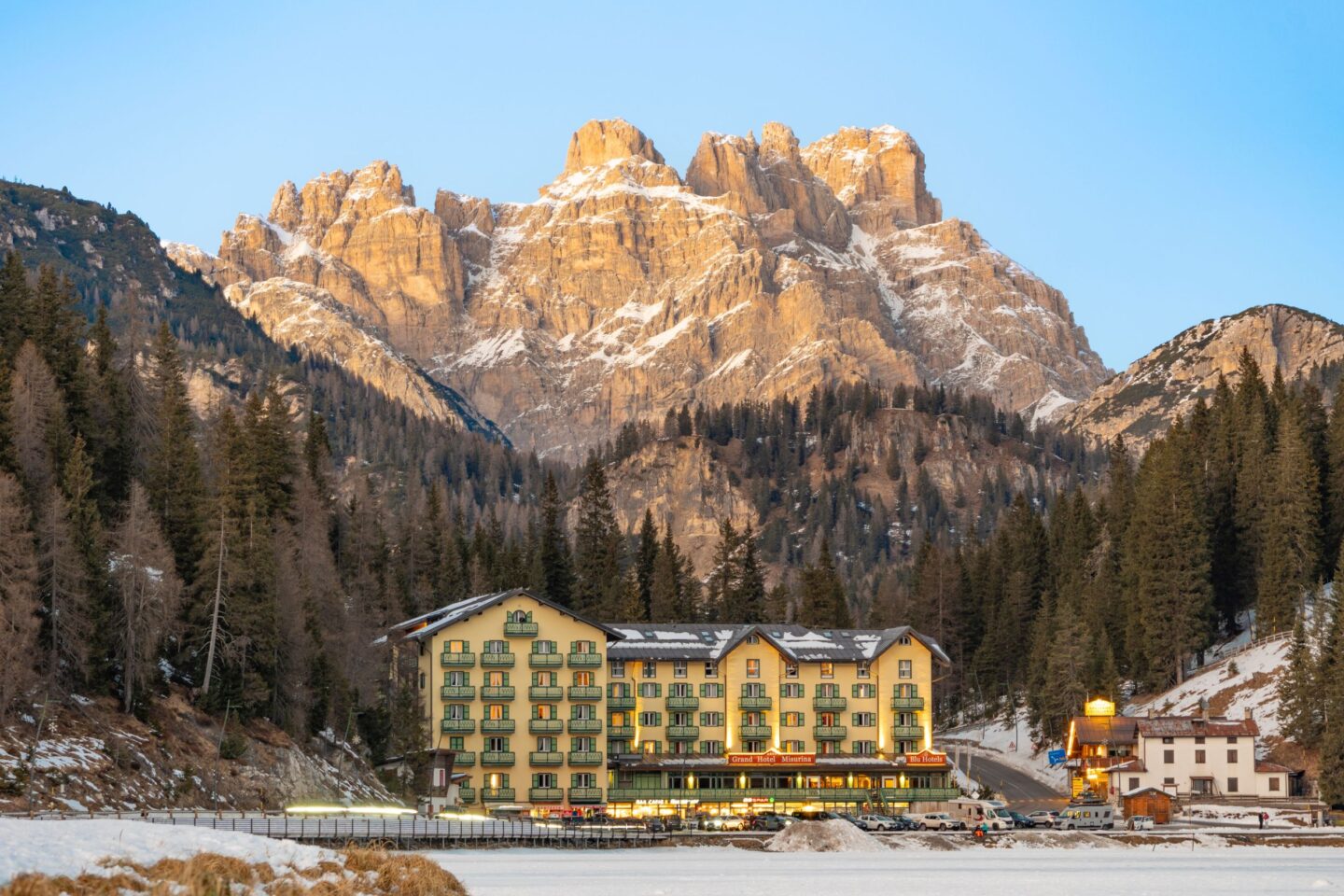
Italian mountain interiors rarely feel cosy because somebody filled them with cushions and called it a day. Their warmth usually comes from a more thoughtful balance: solid natural materials, practical spaces for winter routines and lighting that makes everyone want to stay at the table a little longer. From contemporary hotels in the Dolomites to stone-built chalets in Piedmont and the Aosta Valley, these stays offer ideas that translate surprisingly well to an ordinary home. You don’t need exposed rafters or a view of the Alps (though we all know we do), you only need to notice what makes each room feel grounded.
Use natural materials with purpose
Mountain interiors often place timber and stone at the centre of the room, but they don’tt always embrace the heavy, dark chalet look you might expect. A recent South Tyrolean development arranged its chalet apartments like a traditional hamlet, combining local timber façades with generous glazing that frames the landscape. That tension between warmth and clean contemporary detail offers a useful lesson for your home. Instead of covering every surface in wood, choose one element that can carry the room – maybe that’s open shelving, a vintage dining table, simple wall panelling or a timber headboard. Stone can enter through a fireplace surround, an occasional table or textured ceramic pieces rather than an expensive feature wall. A Piedmont-inspired palette of slate grey, walnut brown and warm cream gives these materials breathing space, while rust, moss or deep red can add personality through smaller pieces. Browsing Italy ski holidays with characterful mountain stays may provide plenty of inspiration, but the aim isn’t to reproduce a chalet theme. The real takeaway is restraint: fewer materials, repeated confidently, tend to feel calmer than a room full of competing “cosy” accessories.
Design the entrance around real life
Some of the most appealing Alpine spaces work beautifully because they expect people to arrive carrying coats, boots and bags. And though we rarely have a snowy piste at our front door, it matters in a suburban hallway just as much. A narrow bench gives you somewhere to remove shoes, while hooks at different heights stop winter layers migrating onto dining chairs. Add a shallow shelf for keys and gloves, then use closed storage for anything that creates visual noise. Even a small basket for scarves can prevent the familiar morning search when everybody is trying to leave at once.
Traditional Aosta Valley buildings developed in varied forms around local customs, slopes and everyday functions, often bringing several household uses together under one large roof; the region’s architecture also draws heavily on wood and stone. You can borrow that efficiency without copying its appearance! Give each awkward corner a purpose and place frequently used items where the routine actually happens. The same practical warmth runs through my simple ways to create a cosier home in winter, where atmosphere and comfort matter just as much as decoration. A hallway that works smoothly will always feel more welcoming than one styled perfectly for a photograph.
Layer the light and bring people together
Italian mountain hotels understand that one ceiling pendant cannot carry an entire evening. When choosing the right lighting for each room, layer pools of light around the places where people read, eat or talk, allowing the rest of the room to soften after dark. At home, begin with the activity rather than the fitting. A floor lamp beside an armchair makes the corner feel intentional, while a low pendant over a table creates a natural gathering point. Wall lights can reveal the grain in timber or the texture of stone without flooding the space.
Furniture placement can reinforce that sense of connection. Many chalet lounges turn chairs towards one another, the fireplace or a window rather than allowing the television to dictate every angle. Try moving an armchair across from the sofa, with a small table and lamp between them, to create a place where two people can talk comfortably. In a smaller room, a rug can define the seating area without adding another piece of furniture. Views also deserve attention – even if yours involves a garden rather than the Dolomites. Keep a window ledge relatively clear, angle a chair towards the light and avoid placing tall storage where it blocks the outlook. A room feels more settled when its layout acknowledges what sits beyond it.
The best Italian mountain interiors create cosiness through rooms arranged for people to spend time together. Take inspiration from the Dolomites, Piedmont and the Aosta Valley, but adapt it to the way you live. One timber shelf, an entrance bench or a well-positioned lamp may change the atmosphere more convincingly than a complete Alpine makeover ever could.

