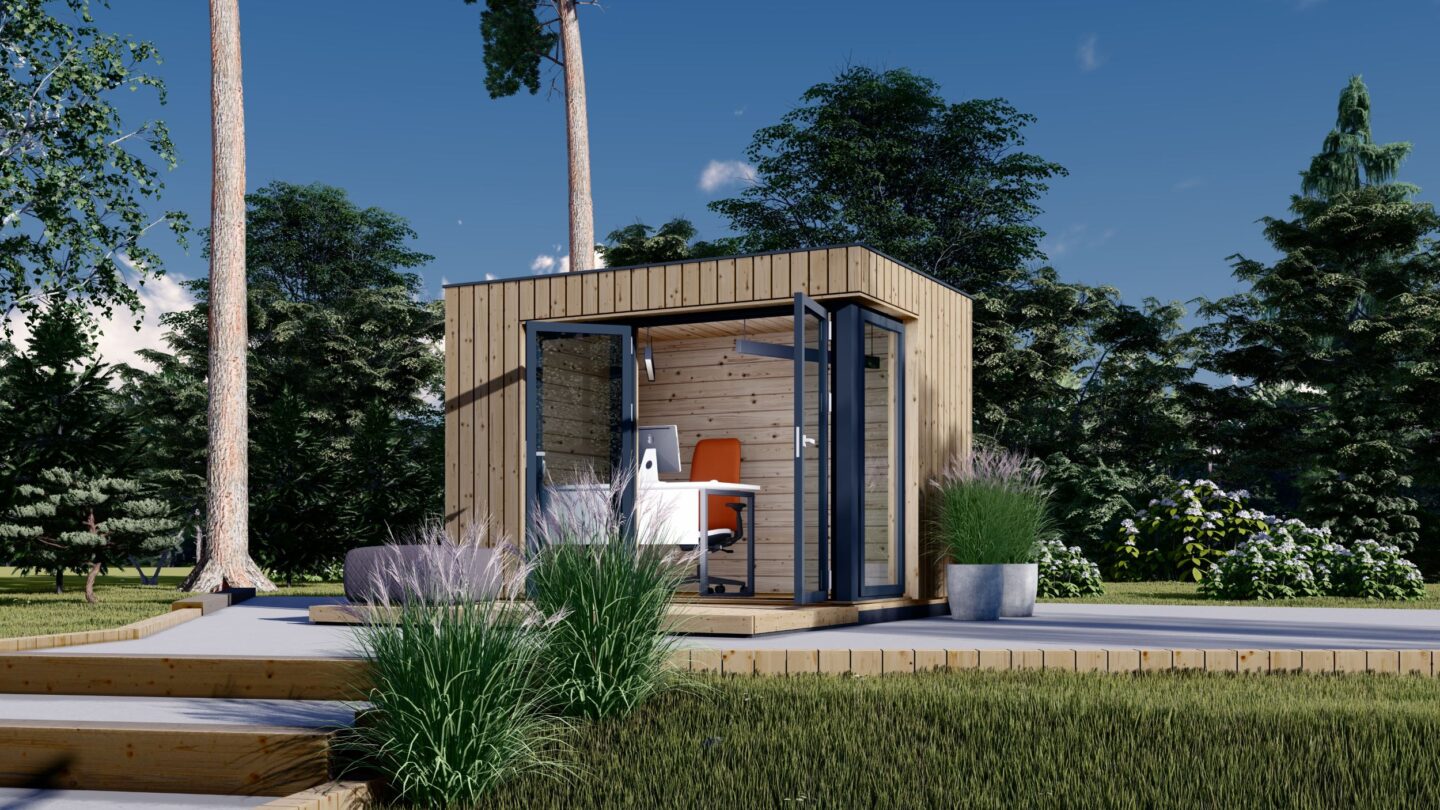
The workplace is changing. As everyone knows, spending time outdoors is great for our health. Both personal and organizational health benefit from exposure to nature. In fact, having an outside office space has become essential for most businesses today to flourish.
Many successful businesses have outside office spaces that are seamlessly integrated with their main workplace. We are not just talking about patio furniture; we are referring to a fully functional workspace that happens to be outdoors.
An outside office area is a functional space where employees can work comfortably. In this approach, working outdoors should not compromise comfort or productivity.
The main purpose of the exterior office space is to give employees a reasonable alternative to their indoor area. When implemented correctly, this approach enhances both employee satisfaction and productivity.
Step 1: Assess Your Space and Define Your Goals
Identify locations in your organization for outdoor workspaces. These spaces can support individual work, meetings, informal breaks, and social interaction. Consider how seasonal the space is—will it be used year-round or only during certain seasons? Finally, determine your budget and set realistic ROI expectations to maximise your plan’s effectiveness.
To quickly identify and assess potential outdoor areas for your outdoor workspace setup, speak with your office manager or your usual facilities contact as your first port of call. For instance, access could be available via rooftops, courtyards, or other underutilized areas, along with a discreet storage or staging area for your outdoor furniture.
Assess the outdoor areas you plan to use or exclude. Along with this, record basic information about the site, including sun and rain shadow and distance from the main office. Also pay attention to the close proximity of relevant facilities like toilets, kitchens, and Wi-Fi repeaters.
Step 2: Design for Comfort and Functionality
To set up an effective outside office it is essential to consider comfort and functionality to support efficient work.
One of the first aspects to consider is outside office furniture. When it comes to selecting outdoor furniture, always opt for commercial-grade furniture. It will be able to withstand the weather conditions for years. Materials such as powder-coated aluminum and marine-grade polymer are ideal.
FSC-certified teak is another option that offers beautiful finishes for your space while being functional in nature. Likewise, you should provide ergonomic chairs for employees who will work there for long hours, just like your office.
In the same way, your desk should be height-adjustable to allow your staff to work comfortably. Next, focus on power and connectivity. Any functional workspace requires accessible power outlets.
Install weatherproof outlets that meet safety standards and allow power and connectivity. You may also consider installing USB ports and backup power solutions.
Step 3: Ensure Technology Infrastructure
For any outside office to function properly, it requires reliable technology infrastructure. Even though it’s outdoors, your office must still meet all basic technology requirements. In order to keep your team safe, as well as to ensure that the wires do not suffer damage from being kept in the open, it is necessary to weatherproof and conceal all power sockets and cables. While we often overlook reliable Wi-Fi connectivity, it is a critical factor to consider when selecting any outside office space. Additionally, to set up an outside office, a mesh system, outdoor access points, or a repeater can be used. Dedicated solutions are also important if your workspace faces lighting challenges.
Step 4: Address Privacy and Professionalism
To create a great outdoor setup, ensure privacy and professionalism. Create a barrier between different physical spaces. Possible solutions include planting, screens, or movable dividers. This will clearly define your working environment and improve sight lines. Sound can also travel easily in open environments. You might consider using white noise machines, natural sound masking, or designating quiet pods to address this situation. For important calls or meetings, designate specific areas for video conferencing and for other verbal meetings. It is equally essential to demarcate the area for multiple work activities. For instance, a space for focused work by oneself, a second space for collaborative work or meetings, a third space for informal breaks. This differentiation reduces interference and increases the efficiency of each type of work. Finally, ensure the space maintains a professional appearance.
Step 5: Plan for Weather and Maintenance
Outside office spaces must be designed with weather and maintenance in mind. Consider installing shade structures such as pergolas, umbrellas, or canopies to protect against sun and rain. In colder climates, heating solutions such as infrared heaters or enclosed pods can extend usability.
Regular maintenance is also essential—clean furniture, inspect electrical components, and treat materials to withstand weather conditions. Choosing durable, weather-resistant materials will reduce long-term maintenance costs and ensure longevity.

